Driver Communication: Light Bulbs, Horns, and Body Language on Phoenix Roads
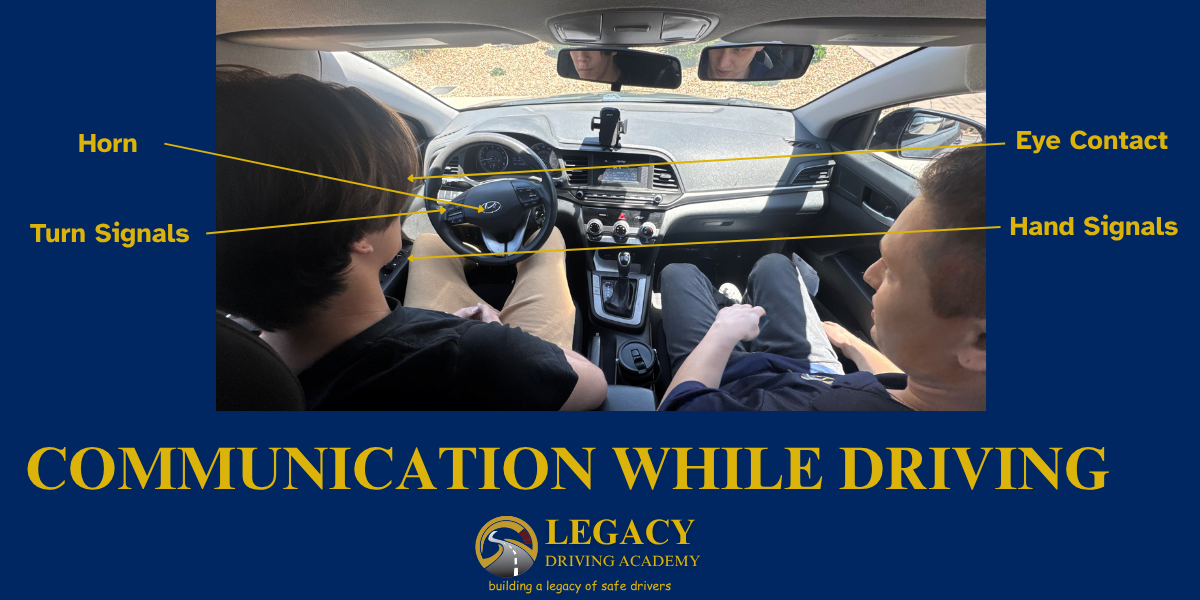
At Legacy Driving Academy, we believe that safe driving in Phoenix is not just about steering, braking, and following traffic rules—it’s also about Phoenix clear communication with other drivers, cyclists, and pedestrians. On the road, communication tools go far beyond words. From turn signals to eye contact, drivers have several ways to share their intentions and prevent accidents. In our Phoenix driving lessons, we focus on strong communication skills behind the wheel, because being understood on the road is just as important as how you drive.
Here’s how we teach our Phoenix driving students to use light bulbs, horns, hand signals, eye contact, and body language to stay safe and confident.
1. Light Bulbs: Turn Signals, Headlights, and Taillights
Your car’s lights are more than just for visibility—they’re your first language on the road.
- Turn Signals (Blinkers): Letting others know you plan to turn or change lanes is critical. At Legacy, we stress using signals 3–5 seconds before making a move.
- Headlights: Beyond night driving, headlights help during rain, dust storms, or early mornings—conditions common in Phoenix. Flashing headlights can also warn another driver of hazards.
- Taillights & Brake Lights: A quick tap on your brakes can alert drivers behind you that traffic is slowing down.
👉 Think of your lights as your “voice” when behind the wheel.
2. The Horn: A Tool, Not a Weapon
Many new drivers hesitate to use the horn, but at Legacy, we teach that it’s meant for safety communication—not frustration.
- Tap, don’t blast: A light honk can alert another driver who may not see you.
- Use for warnings: If someone begins merging into your lane, your horn can prevent a collision.
- Avoid misuse: Leaning on the horn in anger creates confusion and road rage—something Phoenix freeways don’t need more of.
3. Hand Signals: Back to Basics
If your blinkers fail or you’re on a bicycle, knowing hand signals is essential. We teach all students the three universal signals:
- Left Turn: Arm straight out.
- Right Turn: Arm bent upward at a 90° angle.
- Stop/Slow: Arm bent downward at a 45-90° angle, don’t put your arm against the car door, people do not understand that.
Even though modern cars have signals, hand signals are a must for emergencies and help you become a well-rounded driver.
4. Eye Contact & Body Language
Sometimes, the most important communication is non-verbal.
- Eye Contact with Pedestrians: When crossing at busy Phoenix intersections, making eye contact ensures you’ve seen each other.
- Body Language: The way you position your car tells a story. Slowly creeping forward at a stop sign shows you’re preparing to go; staying firmly stopped communicates patience.
- Confidence vs. Hesitation: Other drivers can sense uncertainty. At Legacy, we help new drivers practice smooth, decisive movements to prevent misunderstandings.
Why Communication Matters in Phoenix Traffic
Phoenix is one of the fastest-growing cities in the U.S., and with that comes heavier traffic and diverse driving styles. By combining technology (lights, horn) with human elements (hand signals, eye contact, body language), our students learn to communicate clearly and avoid confusion on the road.
Final Thought on Communication
At Legacy Driving Academy, our goal is to create safe, confident drivers who understand that driving is a two-way conversation. Mastering these communication skills ensures smoother trips, safer intersections, and more respectful roadways across Phoenix.
🚦 Ready to learn not just how to drive—but how to communicate behind the wheel? Enroll with Legacy Driving Academy today and gain the confidence to drive smart in Phoenix traffic.